
Wellbeing
Happy, healthy and ready to learn
At our school, we believe that every child deserves to feel safe, happy, valued and supported. We know that children learn best when they feel secure, have positive relationships and know that the adults around them care about their wellbeing.
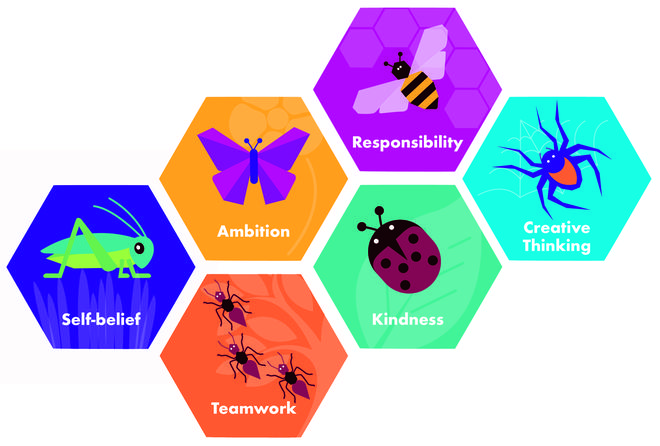
Our school values of Kindness, Teamwork, Responsibility, Creative Thinking, Ambition and Self-belief underpin our approach to wellbeing. They help us create a nurturing and inclusive environment where everyone feels that they belong, differences are celebrated and every child is encouraged to flourish.
We promote Kindness by helping children build positive relationships, show empathy and care for others. Through Teamwork, we encourage children to develop friendships, cooperate and support one another. Responsibility helps children understand their emotions, recognise the impact of their actions and make positive choices. We nurture Creative Thinking by encouraging children to explore different ways to manage challenges and solve problems. Through Ambition, we inspire children to set goals, persevere and recognise their achievements. Above all, we develop Self-belief, helping every child build confidence, resilience and a positive sense of self-worth.
Our aim is for all children to learn and achieve well. We recognise that this is underpinned by their ability to understand their emotions and experiences, form and maintain friendships, express their feelings appropriately, cope with setbacks and manage the everyday stresses of life and change.
We are committed to maintaining a mentally healthy environment for both pupils and staff. We promote a strong sense of belonging, value everyone for who they are, listen to the voices of our school community and teach strategies that support positive mental health and wellbeing.
We also work in partnership with families and relevant services to ensure that help and support can be accessed when needed.
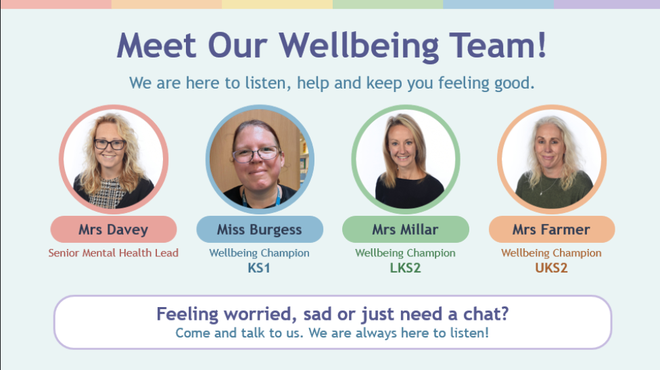
We understand that every child is unique and that their emotional needs may change over time. Through our wellbeing champions in each age phase, our Senior Mental Health Lead and appropriate targeted support, we aim to identify concerns early and help children develop the skills they need to manage their emotions, build resilience and navigate challenges.
Together, our values help us create a school where every child feels they belong, has the confidence to be themselves and is supported to thrive both emotionally and academically.
Worried About Your Child’s Wellbeing?
At Spurcroft Primary School, we want every child to feel safe, happy and supported. If you have concerns about your child’s emotional wellbeing, mental health, friendships or general happiness at school, please do get in touch. Working together with families helps us understand each child’s needs and provide the right support.
What should I do first?
1. Speak to your child’s class teacher
Your child’s class teacher is the first point of contact. You can speak to them directly or email the school office, marking your message for the attention of your child’s class teacher. They will listen to your concerns and work with you to understand what your child may need.
2. Understand your child’s needs
We use the Assess, Plan, Do, Review approach to identify your child’s needs, put appropriate support in place and monitor how well it is working. This involves understanding your child’s strengths and difficulties, planning suitable strategies, putting these into practice and reviewing progress to decide whether any changes are needed.
Where appropriate, our Special Educational Needs Co-ordinator (SENCo) or Senior Mental Health Lead will be involved to help identify the most appropriate support.
3. Explore the support available
Depending on your child’s individual needs, support within school may include pastoral care, emotional wellbeing activities or targeted emotional and social interventions. Where appropriate and accessible, we may also signpost families to or work with other services, such as the school nursing team or Mental Health Support Teams (MHSTs).
We will work with you to consider the most appropriate next steps and help ensure your child receives support suited to their needs.
Who leads wellbeing at Spurcroft?
Mrs Rhian Davey – Senior Mental Health Lead
Mrs Davey supports the school’s approach to promoting positive mental health and emotional wellbeing. She works alongside colleagues, to help ensure that children’s wellbeing needs are recognised and that suitable support is considered.
Please remember: You do not need to wait until a concern becomes serious before speaking to us. If something is affecting your child’s happiness or wellbeing, please start by talking to their class teacher. We are here to listen and work with you.

How we support wellbeing
A safe and nurturing environment
We want every child to feel listened to, respected and safe. Our staff build positive relationships with children and create an environment where children feel confident to share their worries, ask for help and celebrate their successes.
Wellbeing champions
We have wellbeing champions in each age phase who help us maintain a strong focus on children's emotional health and wellbeing across the school. They support our commitment to creating a positive, caring environment where children feel valued, develop healthy relationships and know that support is available when they need it.
Understanding and managing our emotions
Understanding the four Zones of Regulation
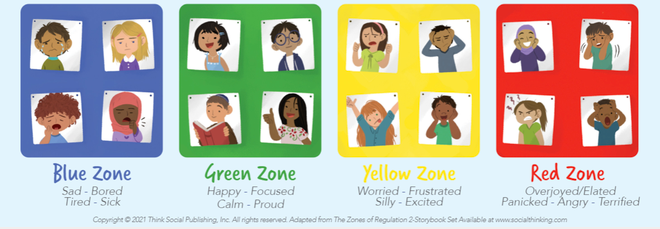
We use the Zones of Regulation to help children recognise their feelings and understand how these can affect their bodies, thoughts and behaviour. The four colour-coded zones give children a simple way to talk about how they are feeling and what might help them.
Blue Zone – Feeling low
Children might feel sad, tired, unwell, bored or lacking in energy. They may need rest, comfort, gentle encouragement or help to feel more alert.
Things that might help:
- Have a drink of water, a snack if needed, or a quiet rest.
- Try some gentle movement, such as stretching or going for a short walk.
- Talk to a trusted adult about how you are feeling.
Green Zone – Feeling settled
Children might feel calm, happy, focused or ready to learn. They are often able to listen, make decisions and manage everyday activities. It is a comfortable zone to be in, but it is okay to experience the other zones too.
Things that might help:
- Have a drink of water, a snack if needed, or a quiet rest.
- Try some gentle movement, such as stretching or going for a short walk.
- Talk to a trusted adult about how you are feeling.
Yellow Zone – Feeling unsettled
Children might feel worried, frustrated, excited, nervous or overwhelmed. Their emotions may be growing stronger, and they might need reassurance, a movement break, some quiet time or support from an adult.
Things that might help:
- Pause and take three slow, gentle breaths.
- Ask for a quiet break, some space or a little time to think.
- Tell a trusted adult what is worrying or frustrating us.
Red Zone – Feeling intense emotions
Children might feel very angry, terrified, extremely upset or out of control. They may need calm, immediate support from a trusted adult and time to feel safe before they are ready to talk through what has happened.
Things that might help:
- Find a safe, calm space with support from a trusted adult.
- Try slow breathing or another familiar calming strategy, if this feels helpful.
- Ask an adult to help us feel safe and supported. We can talk about what happened when we feel ready.
Practice together at home
You could ask your child:
- What zone do you think you are in right now?
- What can you notice in your body that helps you recognise this feeling?
- What might help you feel supported?
- Who could you talk to if your feelings become difficult to manage?
Remember, the Zones are a way to start conversations about feelings, not a way to label children or expect them to feel a certain way. Children may experience several emotions at once, and they may need different strategies at different times.
Download our wellbeing activities
Use the printable resources below to help your child recognise their feelings, think about what helps them and identify a trusted adult they can talk to.
What does this mean for children?
The Zones of Regulation help children understand that all feelings are okay, and it is what we do with those feelings that matters. There is no “good” or “bad” zone, and children do not need to be in the Green Zone all the time.
By learning to recognise their emotions and discover strategies that work for them, children can gradually become more confident in managing challenges, communicating their needs and returning to a state where they feel ready to learn.
Parents and carers can use the same language at home to help children talk about their feelings, for example, “I wonder which zone you might be in right now. What could help you?” This encourages curiosity and understanding rather than judgement.
Wellbeing Support at Our School
We recognise that every child is unique and that, at times, children may need additional support with their emotions, friendships or social development. We aim to identify these needs early and provide appropriate support to help children feel safe, build confidence and access learning successfully.
Depending on their individual needs, support may include:
Check-ins with a trusted adult
Some children benefit from regular check-ins with a familiar teaching assistant (TA). These provide a safe opportunity to talk about how they are feeling, share any worries and receive reassurance and encouragement. These positive relationships help children feel listened to, supported and ready to learn.
Emotional skills intervention
For children who need additional support to understand and manage their emotions, we offer targeted emotional skills sessions. These help children recognise and name their feelings, understand what might trigger different emotions and develop strategies to manage worries, frustration and other challenging feelings. The aim is to build emotional awareness, resilience, confidence and independence.
Social skills intervention
We offer targeted social skills sessions to help children develop positive relationships and friendships. Children have opportunities to practise skills such as sharing, turn-taking, listening, understanding others' feelings, working cooperatively and resolving disagreements. This support helps children build confidence in social situations and develop the skills they need to enjoy positive interactions with others.
Our aim is to equip every child with the skills, confidence and strategies they need to manage challenges, build positive relationships and flourish both emotionally and academically.